
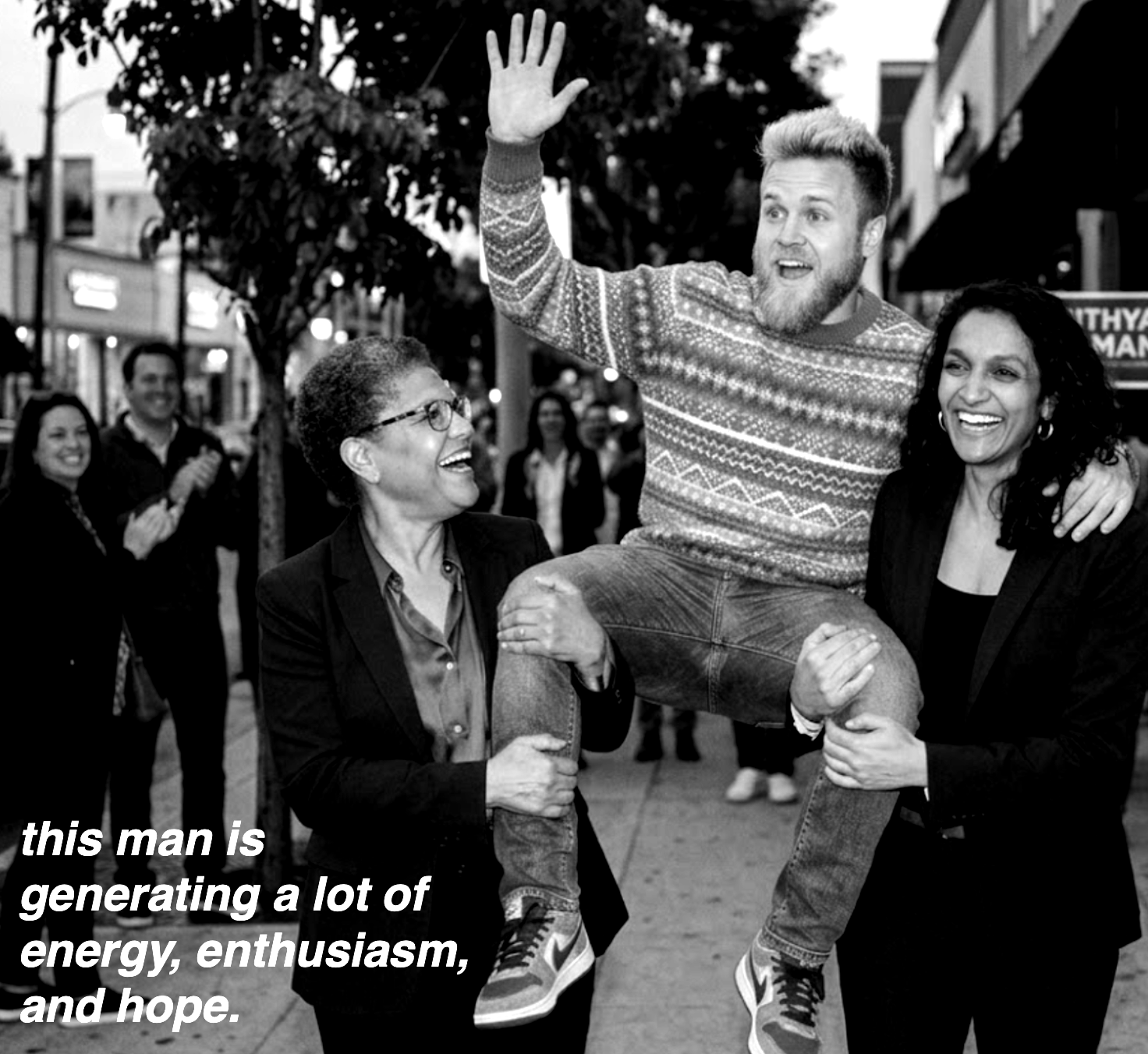
Will LA's voters double down on more of the same or gamble on Spencer Pratt, a reality-show candidate?

In Los Angeles, a reality star storms in with populist fury. He has never held public office, but is convinced only he can fix what professional politicians can’t. The establishment laughs and asks: How could a man with no experience run the second-largest city in the country?
Pratt, 42, is reality TV’s most notorious troublemaker—and now, LA’s most unlikely mayoral contender. When wildfires destroyed his home, Pratt lashed out, criticizing City Hall’s “incompetence” in the press. He first rose to fame as the scheming “dark prince” of The Hills, alongside his wife, Heidi Montag. Pratt entered the mayor’s race this January. With LA in turmoil, his unfiltered outsider campaign is shaking up a city in ways not seen before.
Spencer Pratt might be the jolt LA needs—a disruptor determined to address two decades of urban decline. He seems to have tapped into voter frustration, channeling their anger at a city spiraling out of control under socialist and Democratic leadership. Pratt has shown remarkable confidence in debates against the incumbent mayor, openly expressing his disgust at the city’s conditions and demonstrating a clear understanding of the challenges facing Los Angeles residents.
Spencer Pratt is attracting significant attention. He openly identifies as a Republican and presents himself as a transformative leader for the city. Pratt has become a focal point for conservative and anti-establishment voters. Notable figures, including Elon Musk and Lakers executive Jeanie Buss, have publicly endorsed his campaign.
The owner of LA’s legendary Langer’s also backs Mr. Pratt—after Mayor Bass brushed him off again and again. He begged for help, got nothing but talk, and now he’s had enough. His story is what countless small businesses face under Bass’ watch.
Pratt’s campaign and his supporters are posting deepfaked videos, aggressively challenging the Democrats’ outdated strategies—rejecting the notion of “same old, voters have nowhere to go.” Pratt’s campaign offers a full-blown indictment of the status quo, exposing the decay consuming Los Angeles.
Pratt’s campaign by appearing on podcasts, viral AI videos, and headline-grabbing rants. He has appeared on Joe Rogan and given interviews to mainstream news outlets. His supporters like his blunt, confrontational, and controversial style. It is like a combination of Trump’s playbook and the brashness of New York’s Zohran Mandani. Supporters appreciate his blunt criticism of LA’s decline. The city’s establishment, however, is less impressed. Pratt is significantly impacting the mayoral race through a digital strategy; one of his AI content videos portrays Los Angeles as an “apocalyptic Gotham” and casts him as a Batman-like figure.
But LA isn’t an easy arena; the city is overwhelmingly socialist and Democratic, with voters who are often disengaged and easily influenced. Outsiders or conservative candidates rarely win here. As Rick Caruso learned, money means little when voters are apathetic. For most Angelenos, politics feels like a rigged game—so they continue voting for the same familiar faces, regardless of how bad things become.
Los Angeles’ Democratic political machines are very aggressive too: they rely on fear-mongering, heavily play minorities’ symbolic firsts, and often distract from substantive issues. If Mr. Pratt advances past the primary, he will face intense scrutiny. Every interview he has given, every check he has written, and every relationship he has had will be examined publicly. This process has already begun, as some Hollywood liberals who support Bass are expressing concerns about appearances Pratt made at right-wing events earlier in his life.
Jon Vein, a former Hollywood executive and longtime Democratic donor and activist, posted a lengthy Facebook letter criticizing Pratt’s past actions. Supporters of Karen Bass have widely circulated this letter. Drew Carey, the host of “The Price is Right,” recently criticized Spencer Pratt as well, telling Angelenos on social media that anyone considering voting for Pratt “needs to get their heads out of their asses.”
For this reality star to win, he’ll need to motivate voters who typically stay home. Cynicism among LA voters is pervasive. The city is deteriorating, yet the Democrats and socialists running it blame everyone but themselves—Trump, MAGA, anyone except the real culprits.
This mayoral race could truly break the mold. The city of Los Angeles is falling apart in real time—even diehard establishment types now whisper, “Maybe it’s time for a change.” The city has hit rock bottom: sky-high rents, tent encampments, trash everywhere, and burning neighborhoods. Voters outside the wealthy liberal bubble feel they have nothing left to lose.
To critics, Pratt is clueless and unqualified—a political novice with zero grasp of LA’s real problems. To his fans, that’s exactly the point. After years of dysfunction, why not let this reality show candidate take the wheel?
The 1990s in Los Angeles were marked by significant turmoil—riots, a severe recession, earthquakes, and gang violence all deeply affected residents. Despite these challenges, civic leaders at the time were competent and responsive to community concerns. In contrast, many Angelenos today report feeling helpless and hopeless. A recent UCLA report shows that residents increasingly view Los Angeles as unsafe and unlivable.
Now, even some loyal democratic voters see that decades of one-party rule haven’t helped. Leaders like Karen Bass and Gavin Newsom sound clueless about what real people are living through. We have broken leadership. Neighborhoods are rotting and going up in flames- businesses are bailing.
Regarding homelessness, Spencer Pratt firmly rejects the idea that people living on Los Angeles sidewalks are primarily facing housing problems. Instead, he views homelessness as a crisis rooted in drug addiction and mental health issues. He recently released a video on X outlining his plan to address these challenges. Pratt also believes that some non-profit organizations are profiting from the suffering in Los Angeles, and he has vowed to stop and prosecute those responsible for theft or exploitation.
Pratt’s emergence offers voters a choice between a weakened incumbent mayor, a Democratic Socialist challenger, and a Republican candidate who is attracting support from various groups—including non-traditional voters dissatisfied with the current political climate.
Political analysts suggest that if Spencer Pratt advances past the primary, he could have a strong chance of defeating incumbent Karen Bass in the general election. Pratt is not viewed as a fringe candidate; current polls show he is one of the leading contenders in the mayoral race. His campaign has also seen a recent significant increase in financial contributions.
California uses a non-partisan, top-two primary system. Of all the candidates currently on the ballot, if none receives a majority, the two with the most votes advance to the November general election, regardless of party affiliation.
Establishment Democratic voters who keep electing the same leaders, hoping for different results, also share responsibility for the chaos in Los Angeles. That’s the textbook definition of insanity: doing the same thing repeatedly and expecting a different outcome.
Thank you for reading.
Chamba Sanchez
Lecturer of Politics at various community colleges throughout greater Los Angeles