
In the U.S. the Pay-To-Play Soccer System Grotesquely Excludes Children Whose Parents Are Poor

Soccer, known as “football” outside the United States, is often referred to as the sport of the poor. Across Latin America, Africa, and Europe, it has long been accessible to people from low-income backgrounds. Many of the world’s greatest soccer players rose from working-class roots to achieve international fame. Soccer player superstars like Pele, Maradona, Cristiano Ronaldo, Messi, and Mexico’s Cuauhtémoc Blanco all came from humble beginnings. They excelled not just because of their talent but also because they were given opportunities to play.
In most parts of the world, soccer is easy to play because it requires very little equipment. Children only need a round object and some open space to start a game. Many play barefoot—not by choice, but because their families cannot afford shoes. In developing countries, even cheap plastic soccer balls are often too expensive, so children make their own balls out of old clothes or other materials.
In the United States, soccer is now associated with middle- and upper-middle-class families who can afford costly academies and private coaches. The current “pay-to-play” system creates barriers for many talented players from less affluent backgrounds. Soccer development should not be limited to wealthy suburbs and elite private academies; it should also include low-income communities, where talented children deserve opportunities to play at competitive levels. Until the system brings inner-city talent together with suburban players, American soccer will continue to fall short.
Despite significant investment in youth soccer in America, results have stagnated. After two decades of supposed progress, the level of play has not improved. Investors keep building flashy new soccer complexes, hoping to cash in on the next trend. For example, Glendale’s Americana recently built soccer fields atop its parking structure, the Skyline Pitch—yet another profit-driven facility.
On a podcast, Landon Donovan, a well-known U.S. soccer player now retired, expressed his disappointment with the U.S. after their World Cup elimination. As the hosts discussed the state of American soccer, Donovan shared his path to becoming a professional player and joining the national team, while also criticizing the current pay-to-play youth system. He also cited a 2016 study showing that just 2% of kids in organized American soccer come from families earning less than $50,000 a year.
The inability of low-income families to afford youth soccer has become a systemic issue threatening the future of American soccer. The current system prioritizes profit over developing competitive players. The pay-to-play model nearly ended Donovan’s own dream. If not for generous community members who covered his fees, he would not have played—his single mother could not afford the costs while raising three children. He argues that many U.S. soccer greats would never have played if they had been required to pay fees $3,500-$10,000 a year.
It may not have been entirely negative that the United States failed to reach the quarterfinals. Fans, pundits, and former U.S. soccer stars expressed disappointment with the team’s performance. Much of their criticism focused on Christian Pulisic’s post-game comments, which appeared more self-centered than reflective of the team’s disappointing loss to Belgium.
One positive outcome is that the situation prompted a broader evaluation of player development in the United States. Many critics denounced the current pay-to-play soccer system, which excludes many talented children whose families cannot afford the high costs of club membership. As a result, soccer in the United States has become more about generating revenue than nurturing talent.
As the parent of a daughter who plays soccer, I have seen firsthand how difficult it is for low-income families to afford the fees, which sometimes prevents their children from participating. Private, for-profit organizations quickly exploit these situations. Even public schools, though funded by taxpayers, often charge high fees for field use. As a result, only families with significant resources can afford to let their children play competitive soccer at a high level.
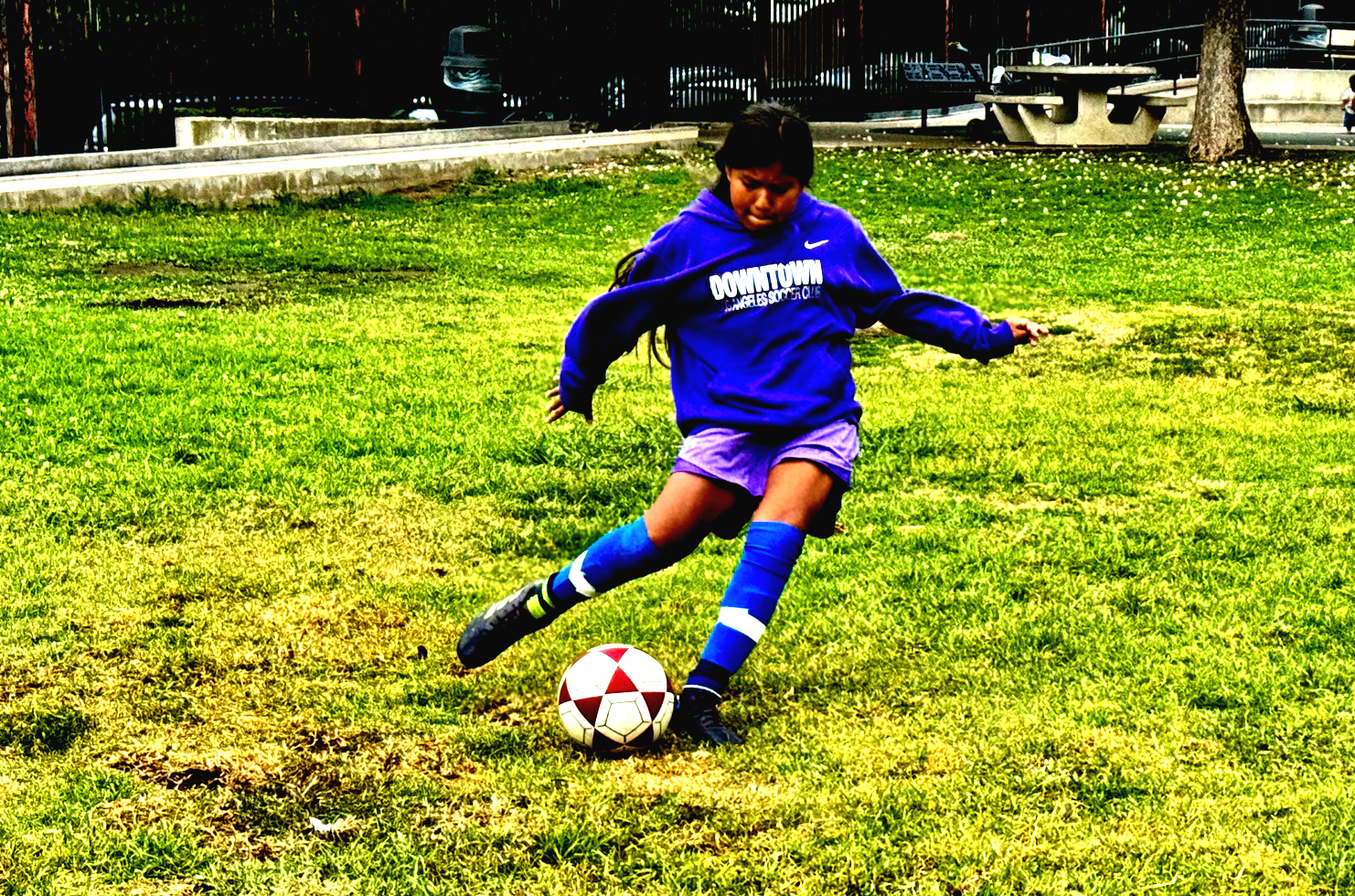
My daughter Athena plays for the Downtown LA Soccer Club, coached by Mick Muhlfriendel. He offers free opportunities to families whose daughters cannot afford the fees. The club uses a Los Angeles Unified School District (LAUSD) field, but securing permits is a constant challenge because the district often charges “lease fees” that the club cannot afford. Coach Mick regularly negotiates with schools, urging them to provide the more affordable “civic center” rates. While these rates are still high, they are at least manageable for the club. Notably, all the children who play for the Downtown Soccer Club attend LAUSD schools, yet this fact seems irrelevant to the so-called “social justice” board members.
The club attended LAUSD board meetings to explain that the Downtown Soccer Club is a nonprofit organization dedicated to providing free opportunities for talented Latina girls whose families cannot afford the fees. Unfortunately, the LAUSD board members disregarded our concerns. Nevertheless, we emphasized how privatizing school soccer fields harms the local community. The Downtown Soccer Club’s work to help Latina girls play competitive soccer at no cost has been featured in several newspapers.
American youth soccer has become more of a gated community than a proving ground. While the gatekeepers of soccer in this country talk about diversity, the reality is a sanitized, suburban game. The world’s soccer powerhouses—European and Latin American countries—will not be outmatched by American technique alone. For the U.S. to compete, it needs players willing to fight for every ball, not just those who can pay to play. Grit and hunger have been replaced by dollar signs, and the pay-to-play system has excluded many talented players from low-income backgrounds.
Soccer leaders in this country must reform youth soccer by building an affordable, inclusive system. Although pay-to-play supporters may resist, real change demands decisive action. Strong leadership should design a new framework, remove those who profit from exclusion, and rally support from government—especially local schools and municipalities that control soccer fields—as well as private donors and corporations, to create accessible facilities. Shutting out kids from low-income families isn’t just unfair—it weakens our national soccer teams.
Thank you for reading.
Chamba Sanchez