

In the U.S. the Pay-To-Play Soccer System Grotesquely Excludes Children Whose Parents Are Poor
Soccer, known as “football” outside the United States, is often referred to as the sport of the poor. Across Latin America, Africa, and Europe, it has long been accessible to people from low-income backgrounds. Many of the world’s greatest soccer players rose from working-class roots to achieve international fame. Soccer player superstars like Pele, Maradona, Cristiano Ronaldo, Messi, and Mexico’s Cuauhtémoc Blanco all came from humble beginnings. They excelled not just because of their talent but also because they were given opportunities to play.
In most parts of the world, soccer is easy to play because it requires very little equipment. Children only need a round object and some open space to start a game. Many play barefoot—not by choice, but because their families cannot afford shoes. In developing countries, even cheap plastic soccer balls are often too expensive, so children make their own balls out of old clothes or other materials.
In the United States, soccer is now associated with middle- and upper-middle-class families who can afford costly academies and private coaches. The current “pay-to-play” system creates barriers for many talented players from less affluent backgrounds. Soccer development should not be limited to wealthy suburbs and elite private academies; it should also include low-income communities, where talented children deserve opportunities to play at competitive levels. Until the system brings inner-city talent together with suburban players, American soccer will continue to fall short.
Despite significant investment in youth soccer in America, results have stagnated. After two decades of supposed progress, the level of play has not improved. Investors keep building flashy new soccer complexes, hoping to cash in on the next trend. For example, Glendale’s Americana recently built soccer fields atop its parking structure, the Skyline Pitch—yet another profit-driven facility.
On a podcast, Landon Donovan, a well-known U.S. soccer player now retired, expressed his disappointment with the U.S. after their World Cup elimination. As the hosts discussed the state of American soccer, Donovan shared his path to becoming a professional player and joining the national team, while also criticizing the current pay-to-play youth system. He also cited a 2016 study showing that just 2% of kids in organized American soccer come from families earning less than $50,000 a year.
The inability of low-income families to afford youth soccer has become a systemic issue threatening the future of American soccer. The current system prioritizes profit over developing competitive players. The pay-to-play model nearly ended Donovan’s own dream. If not for generous community members who covered his fees, he would not have played—his single mother could not afford the costs while raising three children. He argues that many U.S. soccer greats would never have played if they had been required to pay fees $3,500-$10,000 a year.
It may not have been entirely negative that the United States failed to reach the quarterfinals. Fans, pundits, and former U.S. soccer stars expressed disappointment with the team’s performance. Much of their criticism focused on Christian Pulisic’s post-game comments, which appeared more self-centered than reflective of the team’s disappointing loss to Belgium.
One positive outcome is that the situation prompted a broader evaluation of player development in the United States. Many critics denounced the current pay-to-play soccer system, which excludes many talented children whose families cannot afford the high costs of club membership. As a result, soccer in the United States has become more about generating revenue than nurturing talent.
As the parent of a daughter who plays soccer, I have seen firsthand how difficult it is for low-income families to afford the fees, which sometimes prevents their children from participating. Private, for-profit organizations quickly exploit these situations. Even public schools, though funded by taxpayers, often charge high fees for field use. As a result, only families with significant resources can afford to let their children play competitive soccer at a high level.
My daughter Athena plays for the Downtown LA Soccer Club, coached by Mick Muhlfriendel. He offers free opportunities to families whose daughters cannot afford the fees. The club uses a Los Angeles Unified School District (LAUSD) field, but securing permits is a constant challenge because the district often charges "lease fees" that the club cannot afford. Coach Mick regularly negotiates with schools, urging them to provide the more affordable "civic center" rates. While these rates are still high, they are at least manageable for the club. Notably, all the children who play for the Downtown Soccer Club attend LAUSD schools, yet this fact seems irrelevant to the so-called "social justice" board members.
The club attended LAUSD board meetings to explain that the Downtown Soccer Club is a nonprofit organization dedicated to providing free opportunities for talented Latina girls whose families cannot afford the fees. Unfortunately, the LAUSD board members disregarded our concerns. Nevertheless, we emphasized how privatizing school soccer fields harms the local community. The Downtown Soccer Club’s work to help Latina girls play competitive soccer at no cost has been featured in several newspapers.
American youth soccer has become more of a gated community than a proving ground. While the gatekeepers of soccer in this country talk about diversity, the reality is a sanitized, suburban game. The world’s soccer powerhouses—European and Latin American countries—will not be outmatched by American technique alone. For the U.S. to compete, it needs players willing to fight for every ball, not just those who can pay to play. Grit and hunger have been replaced by dollar signs, and the pay-to-play system has excluded many talented players from low-income backgrounds.
Soccer leaders in this country must reform youth soccer by building an affordable, inclusive system. Although pay-to-play supporters may resist, real change demands decisive action. Strong leadership should design a new framework, remove those who profit from exclusion, and rally support from government—especially local schools and municipalities that control soccer fields—as well as private donors and corporations, to create accessible facilities. Shutting out kids from low-income families isn’t just unfair—it weakens our national soccer teams.
Thank you for reading.
Chamba Sanchez
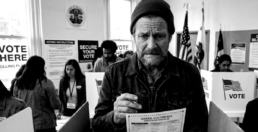
Are Democrats Truly Championing Citizenship—or just Stacking the Deck with Today’s Voting Rules in California?
California’s universal vote-by-mail system is under fire. Every registered voter gets a ballot—whether they want it or not. Ballots can pile up for people who aren’t voting or have moved, with outdated addresses turning mailboxes into security risks. Critics point to ballot harvesting, slow updates, late results, and unreliable postmarks as proof the system needs an overhaul.
Although state officials highlight accessibility and inclusion, the system faces notable challenges—particularly slow vote counting. Ballots postmarked by Election Day can be counted up to seven days later, resulting in delayed results. Late-arriving ballots require manual signature verification and a lengthy "curing" process if errors are found, further postponing final results and potentially eroding public trust. For example, if a ballot is unsigned, election workers must contact the voter to resolve the issue, which adds further delays. This process is known as "ballot curing," which some consider unnecessary. If someone waits until the last minute and forgets to sign the ballot, it clearly shows a lack of interest in civic affairs or that the person was rushed into submitting a ballot without understanding what needs to be done.
Allowing third parties or political operatives to collect and return ballots—known as "ballot harvesting"—raises significant concerns. Critics argue that without a clear chain of custody, the risks of fraud, coercion, and loss of ballot secrecy increase, especially when "ballot brokers" are involved. Some voters report being pressured by campaign groups, nonprofit organizations, or labor unions to hand over their ballots, even when they are not interested in voting. Paid operatives, often working for the Democratic Party, may exert undue influence on vulnerable communities. The involvement of partisan individuals can compromise the secrecy and autonomy of every registered voter's ballot.
It is surprising that California, the world’s fourth-largest economy and the birthplace of the internet, still struggles to improve its voting process. Californians again found themselves waiting for results, just as they did in the last election cycle. This slow pace has fueled claims of fraud and suspicions that the voting process is rigged. Republican voters, in particular, are frustrated and suspect that the state deliberately takes days or even weeks to fully tally the results in primary elections.
During the June 2nd primary election, many engaged voters eagerly awaited the results of key races, including those for governor and Los Angeles mayor. As delays occurred, Republicans in California—and President Trump in Washington—began spreading conspiracy theories, alleging that Democrats were trying to block Republican candidates from advancing to the general election. These accusations intensified when Republican candidates in the gubernatorial and Los Angeles mayoral races initially led but lose ground as more votes were counted after polls close.
President Trump frequently alleges electoral fraud in Democratic-leaning states. This time, he also announced investigations. He posted on social media, "Why the vote counting DELAY???"
Democratic officials denied allegations of electoral fraud, asserting their commitment to a process that ensures all eligible citizens could vote. Republican representatives contended that widespread ballot distribution effectively compels voters to support Democratic candidates. They also noted that late ballots counted after election day usually favor Democratic candidates.
State Democratic leaders argued that voter accessibility and electoral integrity reinforce each other. They maintain that participatory democracy is paramount and have implemented a voting system that accepts late-arriving, postmarked ballots and allows ballot collection for voters unable to deliver them in person. The latter is a source of concern, as many individuals or operatives show up at voters’ homes, demanding ballots if their records show they have not yet voted.
Critic argue, late-counted ballots flip elections for Democrats—just look at June 2nd. Republican leads evaporate as soon as the late votes pour in. With Democrats at 45% of the electorate and Republicans trailing at 25%, the math is brutal: big turnout means easy wins for establishment Democrats. Outsiders? No shot. The rot runs deep—cynicism reigns, civic engagement is an afterthought, and party operatives hound voters at every turn.
If the Democratic machine isn’t behind you, you’re out. Good candidates run, but they get steamrolled. From city hall to Congress, the system protects its own. Democracy’s a casualty—same faces, same results, every time. The game is rigged, and everyone knows it.
Thank you for reading.
Chamba Sanchez
Lecturer of Politics at various community colleges throughout greater Los Angeles
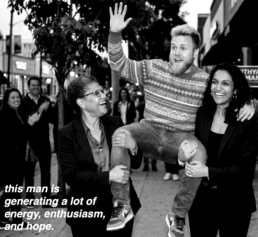
Will LA's voters double down on more of the same or gamble on Spencer Pratt, a reality-show candidate?
In Los Angeles, a reality star storms in with populist fury. He has never held public office, but is convinced only he can fix what professional politicians can’t. The establishment laughs and asks: How could a man with no experience run the second-largest city in the country?
Pratt, 42, is reality TV’s most notorious troublemaker—and now, LA’s most unlikely mayoral contender. When wildfires destroyed his home, Pratt lashed out, criticizing City Hall’s “incompetence” in the press. He first rose to fame as the scheming “dark prince” of The Hills, alongside his wife, Heidi Montag. Pratt entered the mayor’s race this January. With LA in turmoil, his unfiltered outsider campaign is shaking up a city in ways not seen before.
Spencer Pratt might be the jolt LA needs—a disruptor determined to address two decades of urban decline. He seems to have tapped into voter frustration, channeling their anger at a city spiraling out of control under socialist and Democratic leadership. Pratt has shown remarkable confidence in debates against the incumbent mayor, openly expressing his disgust at the city’s conditions and demonstrating a clear understanding of the challenges facing Los Angeles residents.
Spencer Pratt is attracting significant attention. He openly identifies as a Republican and presents himself as a transformative leader for the city. Pratt has become a focal point for conservative and anti-establishment voters. Notable figures, including Elon Musk and Lakers executive Jeanie Buss, have publicly endorsed his campaign.
The owner of LA’s legendary Langer’s also backs Mr. Pratt—after Mayor Bass brushed him off again and again. He begged for help, got nothing but talk, and now he’s had enough. His story is what countless small businesses face under Bass’ watch.
Pratt’s campaign and his supporters are posting deepfaked videos, aggressively challenging the Democrats’ outdated strategies—rejecting the notion of “same old, voters have nowhere to go.” Pratt's campaign offers a full-blown indictment of the status quo, exposing the decay consuming Los Angeles.
Pratt’s campaign by appearing on podcasts, viral AI videos, and headline-grabbing rants. He has appeared on Joe Rogan and given interviews to mainstream news outlets. His supporters like his blunt, confrontational, and controversial style. It is like a combination of Trump’s playbook and the brashness of New York’s Zohran Mandani. Supporters appreciate his blunt criticism of LA’s decline. The city’s establishment, however, is less impressed. Pratt is significantly impacting the mayoral race through a digital strategy; one of his AI content videos portrays Los Angeles as an "apocalyptic Gotham" and casts him as a Batman-like figure.
But LA isn’t an easy arena; the city is overwhelmingly socialist and Democratic, with voters who are often disengaged and easily influenced. Outsiders or conservative candidates rarely win here. As Rick Caruso learned, money means little when voters are apathetic. For most Angelenos, politics feels like a rigged game—so they continue voting for the same familiar faces, regardless of how bad things become.
Los Angeles’ Democratic political machines are very aggressive too: they rely on fear-mongering, heavily play minorities' symbolic firsts, and often distract from substantive issues. If Mr. Pratt advances past the primary, he will face intense scrutiny. Every interview he has given, every check he has written, and every relationship he has had will be examined publicly. This process has already begun, as some Hollywood liberals who support Bass are expressing concerns about appearances Pratt made at right-wing events earlier in his life.
Jon Vein, a former Hollywood executive and longtime Democratic donor and activist, posted a lengthy Facebook letter criticizing Pratt’s past actions. Supporters of Karen Bass have widely circulated this letter. Drew Carey, the host of "The Price is Right," recently criticized Spencer Pratt as well, telling Angelenos on social media that anyone considering voting for Pratt "needs to get their heads out of their asses."
For this reality star to win, he’ll need to motivate voters who typically stay home. Cynicism among LA voters is pervasive. The city is deteriorating, yet the Democrats and socialists running it blame everyone but themselves—Trump, MAGA, anyone except the real culprits.
This mayoral race could truly break the mold. The city of Los Angeles is falling apart in real time—even diehard establishment types now whisper, “Maybe it’s time for a change.” The city has hit rock bottom: sky-high rents, tent encampments, trash everywhere, and burning neighborhoods. Voters outside the wealthy liberal bubble feel they have nothing left to lose.
To critics, Pratt is clueless and unqualified—a political novice with zero grasp of LA’s real problems. To his fans, that’s exactly the point. After years of dysfunction, why not let this reality show candidate take the wheel?
The 1990s in Los Angeles were marked by significant turmoil—riots, a severe recession, earthquakes, and gang violence all deeply affected residents. Despite these challenges, civic leaders at the time were competent and responsive to community concerns. In contrast, many Angelenos today report feeling helpless and hopeless. A recent UCLA report shows that residents increasingly view Los Angeles as unsafe and unlivable.
Now, even some loyal democratic voters see that decades of one-party rule haven’t helped. Leaders like Karen Bass and Gavin Newsom sound clueless about what real people are living through. We have broken leadership. Neighborhoods are rotting and going up in flames- businesses are bailing.
Regarding homelessness, Spencer Pratt firmly rejects the idea that people living on Los Angeles sidewalks are primarily facing housing problems. Instead, he views homelessness as a crisis rooted in drug addiction and mental health issues. He recently released a video on X outlining his plan to address these challenges. Pratt also believes that some non-profit organizations are profiting from the suffering in Los Angeles, and he has vowed to stop and prosecute those responsible for theft or exploitation.
Pratt’s emergence offers voters a choice between a weakened incumbent mayor, a Democratic Socialist challenger, and a Republican candidate who is attracting support from various groups—including non-traditional voters dissatisfied with the current political climate.
Political analysts suggest that if Spencer Pratt advances past the primary, he could have a strong chance of defeating incumbent Karen Bass in the general election. Pratt is not viewed as a fringe candidate; current polls show he is one of the leading contenders in the mayoral race. His campaign has also seen a recent significant increase in financial contributions.
California uses a non-partisan, top-two primary system. Of all the candidates currently on the ballot, if none receives a majority, the two with the most votes advance to the November general election, regardless of party affiliation.
Establishment Democratic voters who keep electing the same leaders, hoping for different results, also share responsibility for the chaos in Los Angeles. That’s the textbook definition of insanity: doing the same thing repeatedly and expecting a different outcome.
Thank you for reading.
Chamba Sanchez
Lecturer of Politics at various community colleges throughout greater Los Angeles
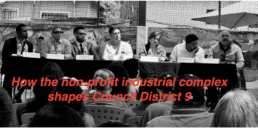
Nonprofit loyal soldier candidates are fighting to transform Los Angeles’ most impoverished district
Seven candidates—six Latino, one African American—faced off at a forum hosted by local nonprofit A Place Called Home, playing to a packed audience of nonprofit insiders.
District Nine is at a breaking point: demographic shifts, swirling scandals, and urban investments that rarely trickle down to benefit the poor. Nonprofits—resource gatekeepers—loom large in the fight for the district’s future.
Non-profit organizations exert significant influence in communities within this district. For many years, elected officials have distributed resources to low-income residents primarily through these organizations, which are highly prevalent throughout the area. Representatives from these organizations were strongly represented at the event.
The leading candidates in this race have been products of the local non-profit machine, loyal soldiers who have been screaming at the top of their lungs about the injustices of capitalism. These candidates have been schooled that those who fund their organizations must be at the top of their list of priorities. And that could be a donor’s agenda, or as is usually the case, politicians’ agendas representing this district. Simply, these NGOs are there to uphold the status quo. A change of course can only be incremental, not radical. Radical change will ruffle feathers among wealthy donors and politicians who fund their organizations.
The forum made one thing clear: experience was in short supply. Only one candidate has run a business. The rest leaned on vague dreams or narrow plans—few seemed ready for the real fight ahead.
Most candidates assert their qualifications by citing their upbringing in the district or their residence there throughout their adult lives. Many are affiliated with the non-profit sector, which plays a significant role in the community.
Several prominent politicians representing South Central Los Angeles have endorsed candidates in this race. Councilman Price supports his deputy chief of staff, Jose Ugarte. Marqueese Harris-Dawson, representative for District Eight, and Mayor Bass back Elmer Rodan. County Supervisor Holly Mitchell supports Jorge Nuno. At the forum, Estuardo Mazariego stated that Eunisses Hernandez, representative for District One, and City Controller Kenneth Mejia support his candidacy.
One candidate, Estuardo Mazariego, a community organizer, has an unconventional background and openly discusses his past, including a shoplifting conviction at age 19 and a conviction for gun possession. Mazariego frames these experiences as assets that have enriched his perspective as an immigrant and resonate with challenges faced by many in the district. However, this narrative has met with skepticism. Candidate Ugarte contends that multiple convictions are problematic and asserts that voters are unlikely to support a candidate perceived as disregarding the law.
District Nine is the poorest among the fifteen districts in Los Angeles, with 40% of its 260,000 residents living in poverty. Approximately 80% of the population is Latino, the highest proportion of any district in the city, while 13% of residents are African American. Historically, this district nine encompasses a significant portion of South Central Los Angeles, including the Central Avenue Corridor, which became a center of Black Los Angeles in the 1940s.
This distric is also home to the University of Southern California (USC), the neon-soaked L.A. Live, the Convention Center, and many other venues for the 2028 Olympic Games.
The $2.6 billion L.A. Convention Center expansion—a city gamble for Olympic glory and Vegas-style tourism—will bleed $100 million a year from taxpayers starting in 2030. Only two candidates, Jorge Nunez and Jorge Hernandez Rosas, dared to oppose this high-stakes bet.
A Latino candidate is guaranteed to win this seat in this election. Traditionally, this district has been represented by African Americans. Many African Americans see this election in this district as signifying a further decline in Black political influence. Although with only 9% of the population, the city of Los Angeles has an African American mayor, and the president of the city council is also African American. The largest labor organization in LA, the County Federation of Labor, is being led by another African American woman.
African Americans, like other groups, must endeavor to recruit better candidates. The loss of political power by any ethnic group is often accelerated when its candidates are perceived as corrupt or unethical and prioritize narrow group interests over broader community needs.
Tensions between the African American and Latino communities in the district are still there. These tensions were evident at this candidates' forum, where candidates initially introduced themselves in Spanish, prompting visible dissatisfaction and complaints from some African American attendees. The candidates subsequently switched to English.
The ethnicity of candidates should not be the primary consideration, as the district faces significant challenges in poverty, housing, homelessness, crime, and education, among others. Residents would benefit from prioritizing candidates with effective solutions over considerations of racial identity. District Nine, more than any other in Los Angeles, requires leaders committed to pursuing transformative policies rather than incremental changes.
In the primary on June 2nd, any candidate who gets more than 50% plus one will win the election. There is a history in this district indicating that primary turnouts are usually low. Therefore, a candidate who can form a coalition that includes African American voters might win this thing outright in June.
If you want the devil you know, pick Jorge Nuno or Jose Ugarte—The other candidates lack a macro understanding of the challenges facing this district, all they know is the non-profit world.
Thank you for reading.
Chamba Sanchez
Lecturer of Politics at LACCD
________________________________________________________________
Photo Credit: Pictures used in this piece were taken by author at a candidates forum

The Bolivarian Dream is Dead
Early on Saturday, January 3, U.S. military forces entered Caracas and captured Venezuelan President Maduro and his wife. The U.S. had targeted Maduro for some time. They were quickly flown out of Venezuela to New York, where they will be held. Maduro faces drug and weapons charges. That morning, President Trump told reporters that Washington would now oversee Venezuela.
Trump's press conference also revealed that the operation was the result of meticulous planning involving multiple branches of the U.S. military—soldiers, sailors, airmen, Marines, and Space Force guardians—each playing a critical role in its execution. Key intelligence agencies, including the CIA, NSA, and NGA, worked closely together to track and ultimately capture Maduro and his wife. The mood across Trump’s administration was openly celebratory, while details about the cost and scale of the resources used were notably absent.
Some history here, in the 1800s Simón Bolívar envisioned a united Latin America capable of resisting foreign interference, grounded in regional cooperation and anti-colonial ideals. Hugo Chávez later reworked that legacy around socialism and anti-imperialism, launching the Bolivarian Revolution and promoting “21st-century socialism” as a counterweight to U.S. influence. Maduro carried the movement forward but failed to sustain its momentum. Deep regional divisions stalled the project, and after 13 years in power, Maduro’s presidency was widely rejected by the U.S. and European nations, with his 2024 re-election broadly dismissed as illegitimate.
Despite Maduro’s removal, Venezuela’s government remains intact. The power structure built under Hugo Chávez is largely unchanged, and the path to a political transition remains unclear. Maduro’s inner circle is still in control, with Vice President Delcy Rodríguez installed as his successor, while the same military leadership continues to prop up the regime. Resistance has already begun: the new president has openly pushed back against U.S. directives, prompting Trump to issue sharp warnings that any defiance will be met with consequences more severe than those faced by Maduro..
People in the United States reacted quickly and with strong opinions. Critics on the political left said the operation was really about oil, since Venezuela has the world’s largest proven oil reserves. They saw this as a return to traditional American intervention in Latin America, driven by economic interests rather than democracy.
President Trump gave a different explanation. Speaking from Mar-a-Lago with top military and cabinet officials, he described the mission, called Operation Absolute Resolve, as quick and precise, and said only the United States could have carried it out. He said the reasons for removing Maduro were national security, law enforcement, and economic interests.
The Trump administration has refused to recognize Maduro as a legitimate leader. Instead, it has treated him as a criminal. U.S. officials have accused him of running the so-called “Cartel de los Soles,” an organization allegedly responsible for moving large amounts of drugs through South America and into the United States. The Justice Department indicted Maduro, claiming his actions contributed to the drug crisis and violent crime in American communities. The administration has also argued that Venezuelan gangs, including Tren de Aragua, were deliberately allowed—or even encouraged—to spread into the United States.
There was also a strong economic reason for the operation. Trump said Venezuela had taken billions of dollars’ worth of American-built oil infrastructure, and that the U.S. was just reclaiming what was stolen. He said major American oil companies would soon return to Venezuela to rebuild and invest in its struggling energy sector. Trump said that once money starts coming in again, the U.S. would recover its costs and then help return wealth to the Venezuelan people.
Some analysts describe Trump’s foreign policy as a modern spin on the Monroe Doctrine, often jokingly calling it the “Donro Doctrine.” The original doctrine, declared more than 200 years ago, asserted U.S. leadership in the Western Hemisphere. Trump’s version reflects his belief that the United States must aggressively push back against foreign influence in the region—particularly from Iran, China, and Russia, all of which he claimed were being actively courted by Maduro. He was deeply irritated to see Maduro cozying up with these countries. Trump is reasserting American presence and dominance in the Western Hemisphere, to protect America's interests.
The Monroe Doctrine has served as a guiding principle for U.S. presidents for over a century, shaping countless interventions across Latin America. Here are some notable interventions: in 1954, the CIA orchestrated a coup in Guatemala that removed democratically elected President Jacobo Árbenz. Árbenz had proposed sweeping land reforms that threatened U.S. business interests, particularly the United Fruit Company, and were painted as having communist undertones. This operation set the tone for decades of U.S. involvement in the region. In 1961, the Bay of Pigs invasion targeted Cuba, with the CIA backing Cuban exiles in a failed attempt to overthrow Fidel Castro. Castro outmaneuvered the U.S., delivering a major blow to American credibility and power, and this episode played a significant role in escalating tensions that culminated in the Cuban Missile Crisis of 1962.
Fast forward to 1973, at the height of the Cold War, the U.S. played a key role in orchestrating a military coup in Chile. Marxist President Salvador Allende was overthrown, and General Augusto Pinochet assumed power, ushering in a brutal dictatorship. The pattern continued with interventions in Grenada in 1983, the Nicaraguan and Salvadoran conflicts throughout the 1980s, and Panama in 1989, when U.S. forces invaded and captured Manuel Noriega on drug trafficking charges.
Noriega’s arrest has often been compared to the recent capture of Nicolás Maduro, highlighting a clear throughline: when leaders in the region clash with U.S. strategic or economic interests, intervention is often the chosen course. These episodes reveal a consistent U.S. approach to exerting influence, blending law enforcement, economic pressure, and military action—all under the long shadow of the Monroe Doctrine.
Maduro’s swift removal, amplified by public statements and wall-to-wall media coverage, ensured the intervention resonated far beyond Venezuela. The message was unmistakable: leaders who defy U.S. expectations—or threaten regional stability and American interests—may face serious consequences. It was, in effect, a signal to South American governments to fall in line, following the path of close U.S. allies like El Salvador’s President Nayib Bukele and Argentina’s President Javier Milei. That alignment has paid off—most notably for Milei, whose government secured a $20 billion currency swap from the U.S. Treasury.
Another important point to make here is that overthrowing Madure was a strategic move. Trump's people also believe that they were also brutally disrupting the Cuban government. Since Maduro subsidized a lot of oil to Cuba. With Maduro being gone, it is the end of Cuba, at least that is what Cuban American and Secretary of State Marco Rubio hopes. Trump also mentioned the Colombian President, stressing the need for cooperation on security and anti-drug efforts. He also criticized the Mexican President for not doing enough to stop cartel violence in Mexico.
Saturday, January 3 marked an unprecedented and consequential moment for Venezuela and the region—one likely to echo through hemispheric politics for months, if not years, as leaders reconsider the risks of defying U.S. priorities.
Thank you for reading.
Chamba Sanchez teaches politics at various colleges across Los Angeles County
________________________________________________________________________________________
Photo Credit: Picture used purchased from stock photo.

Democrats Are Spending $300 Million on a Proposition While Grotesquely Ignoring the Problems Facing the Poor. I am Voting NO on Prop.50
Democrats running this state have massively failed people living in poverty in California. Many living in economically disadvantaged communities wake up every morning to piles of trash, anxious because their rent is too high, seeing their civic leaders being indicted for betraying the public trust, watching their children getting a crappy education, and seeing tents with homeless people on every other block.
With so many people in need and many profound challenges in the state, how can democrats be forcing an election for a proposition that will cost taxpayers $300 million that might not even make a difference, and why is nobody questioning it?
The entire democratic political establishment in California has united in an effort to sell Prop. 50 to voters in the state. They do not have to worry about the wealthy democratic voters since they constantly participate in the political process in this state. They are spending millions on mobilizing the poor, those who cannot see beyond the challenges in their communities. If one asks one of these individuals struggling in this state whether they have ever heard of "gerrymandering" or congressional maps, most of them will not know what to say.
The poor, including Latinos, have been left out of the narrative of power by Democrats governing the state. Some of them work from 70 to 80 hours a week to provide for their families, leaving no time for civic engagement. Many have left California for Texas, Arizona, and Nevada because the cost of living in California is obscenely high.
It was widely reported last year that President Trump flipped 10 counties in California and that Kamala Harris won 1.8 million fewer votes than the then-candidate Biden in 2020. These election results were the core reason why Trump won the popular vote in 2024. Many voters here in California are frustrated, as they do not see the democratic political power running the state solving their problems; some of these voters are moving to the Republican camp, including Latinos.
As of October 2025, the Republicans in the House of Representatives in Washington hold a majority by a small margin of seats. The last numbers show that Republicans hold a 219-213 majority in the U.S. House, with three vacancies.
Prop. 50 in California is supposed to be a counterpunch to what Republicans are doing in Texas. The governor and the legislature in Texas bent their knees to the President. The Republican led Texas legislature redrew the congressional maps in an effort to give the President the needed seats so Republicans can continue controlling the House of Representatives.
The state of California currently has an independent citizens' redistricting commission that draws the congressional district maps. Voters took the power away from politicians in 2010.
A YES vote on Prop. 50 will temporarily dismantle this independent commission and allow the Democratic-led legislature to draw congressional lines that will form new districts. Literally, Democrat politicians will be choosing their voters, instead of voters choosing them.
A NO vote on Proposition 50 will allow the independent commission to continue drawing the lines for the congressional districts. This commission serves the public interest of voters; it also attracts more thoughtful candidates to run for political offices in this state. One should check the candidates who are currently running for governor next year; all of them have been part of the political power for the last 30 years. This state needs new candidates with a deeper level of thinking to solve the pressing problems.
Most democratic voters believe the hype that the sky will fall if Prop. 50 does not get the majority of votes in November. Of course, they are being scared using Trump and they are now supporting the Proposition. A couple of months ago, 60% of voters wanted to keep the independent commission in drawing the lines for these congressional maps. After all the hype and scare tactics done by democrats, now the majority of voters are all for Prop. 50. And they no longer care about Democrats spending an outrageous $300 million on this election.
In the interests of solving societal problems, governance should be rooted in the principles of compromise. These principles in this country have been thrown out the window, and a tit for tat approach has replaced them. Governor Newsom is telling voters in California that we have to fight President Trump, "fire with fire," even if it is the destruction of the little democracy we have left.
There are 52 members of the House of Representatives from the State of California; Democrats control 43 of these seats, and Republicans control the other 9. Most political pundits who are following this closely see Prop. 50, giving Democrats an additional four seats so that they will end up with 47 of the state's 52 congressional seats. Newson and his party are hoping to gain five seats to offset the seats assumed to be lost in Texas.
If Republicans lose the House, they will also lose control over the legislative agenda and other key leadership positions in committees. President Trump understands the implications of allowing Democrats to win the House, so he has been busy asking Republican-controlled red states to alter congressional districts to keep Republicans in charge of the House of Representatives.
In the end, saying Yes to Prop. 50 might not do anything in derailing Republicans controlling the House of Representatives. Nonetheless, regular folks in California will immediately feel the austere effect. For starters, spending $300 million is unacceptable in light of all the challenges facing this state. The independent commission that voters approved in 2010, designed to create congressional maps that favored political parties, might not come back.
It is a win-win situation for democrats, even if Prop. 50 makes no difference in Washington; democratic politicians were successful in convincing voters to dismantle the independent commission, and they will now do whatever they want with these congressional maps. Although they are telling us it is temporary, does anyone seriously believe that the new Democrats who might win seats in the House of Representatives with the passing of Prop. 50 will be courageous enough to give up their seats and demand that their party reinstall the independent commission? Of course not, they will do whatever they can to make sure that the Democratic Party keeps this gerrymandering power gotten by saying Yes to Prop. 50.
California is known as a bastion of progressiveness; but the democratic leadership has utterly ignored profound problems facing people living in poverty in this state whose communities are in chaos and full of filth.
Thank you for reading.
Chamba Sanchez

Title 42 Expires on May 11th and Still no Political Imagination for Reform
Title 42 is scheduled to expire on May 11th. And immigration authorities will immediately start using Title 8 of the United States Code to deal with the thousands of migrants at the U.S. southern border.
The Secretary of Homeland Security, Alejandro Majorkas, told reporters, "Our border is not open and will not be open after May 11th." He spent this past weekend at the border using harsh language for those migrants who dare to cross the border. He also recognized that Unlike Title 42, Title 8 mandates the U.S. to give migrants a preliminary interview to those requesting asylum.
It is rumored that many smugglers in Latin American countries are telling migrants that once Title 42 ends on May 11th, getting into the United States will be a lot easier. Consequently, politicians in Washington from both political parties expect a "surge" in the number of migrants trying to come into the United States. Expeditiously, President Biden dispatched 1,500 troops to the southern border.
The economic and political problems in Cuba, Nicaragua, Haiti, and Venezuela have motivated people to leave these countries and head to the United States. They are fleeing persecution, poverty, oppression, and unstable political systems. People from these countries have swollen the number of people trying to enter the United States.
It has been widely reported that since 2019 nearly 3 million migrants were immediately expelled without processing their asylum claims using Title 42, even when the majority of them had well-documented persuasive cases.
According to Secretary Alejandro Majorka, On May 12th, a day after Title 42 has expired, an underaged child who arrives at the border will be taken into custody and transferred to the Department of Health and Human Services. Then, an effort to find a relative or a sponsor will be made so that child can be released. Secretary Majorkas contends this process is not a loophole but a humanitarian component of the law. He further stated that a family that arrives at the border after Title 42 has expired and has not filed for asylum in other countries as required will immediately be placed in removal proceedings. And individuals removed using Title 8 will be punished with a five-year ban for re-admission to the United States.
Secretary Majorkas makes it sound like everything is under control, but that conflicts with what goes on the ground. It is widely known that there are two million asylum cases in the backlog. Immigrants who were bused to New York have gotten court dates until 2033. This is woefully insane and unacceptable. This scenario is an utter display of a broken immigration system crying out for a legislative solution.
President Biden is trying to strike a balance between stopping migrants from coming to the U.S. border with unrealistic opportunities for migrants to enter the U.S. legally. His administration is proposing to open processing centers in Guatemala and Colombia.
The Biden Administration is telling reporters that these centers will provide opportunities for family reunification programs and financial support to fight smugglers.
Although the Biden Administration is still developing details, those efforts will surely defy logic and will not do much to discourage migrants from getting into migrant caravans and taking the long journey to the U.S. border.
The asylum system was created by the Refugee Act of 1980. The U.S. agreed and promised to take people from all over the world facing persecution. Trump and the Biden administration ignored the Refugee Act and created chaos or misery in migrants' lives when sent to Mexico or their original countries. Now that Title 42 is about to expire, anyone who wants to apply for asylum can do so once at a port of entry or in the United States. Indeed, migrants who can successfully make it to any port of entry have the legal right to request asylum.
The presidential election is moving full steam ahead with candidates using anti-immigrant rhetoric in pursuing voters. President Biden made it official last week that he was running for re-election. Astonishingly, he didn't even mention the issue of immigration. It is not hard to extrapolate what the future holds for the issue of immigration. No reform anytime soon.
When President Biden was a presidential candidate, he enthusiastically supported an immigration plan on his very first day in office. Once elected President and Democrats controlled both houses, the promise of immigration reform went unfulfilled again. In the face of electoral pressure, President Biden used former President Trump's inhumane policies, which he once harshly criticized as a presidential candidate. Advocates for immigrants appear incapable of breaking out of this vicious cycle with Democrats who claim to be their friends.
Unequivocally, our immigration system is indisputably broken and will not disappear until both parties are willing to spend political capital and use their political imagination to solve it.
The issue of immigration has been robustly discussed in Washington this past week. Nonetheless, There was nothing about proposing reform or providing opportunities to hard-working immigrants working in this country for a better future for their families while contributing to this country.
The current conversation in Congress and the White House is about strategizing how to make it more difficult for migrants at the border. So this potential "surge" at the border with Mexico can be more manageable.
Thank you for reading
Chamba Sanchez
Teaches Politics at Los Angeles Community College District
___________________________________________________________________
Photo Credit: Pictures used purchased from Stockphoto.
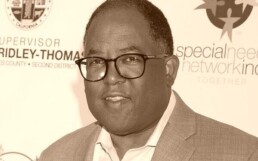
In Light of all the Tribalism going on, Latinos Could Have Given A Second Chance To Their Leaders. They lost Two Powerful Positions
Latinos in Los Angeles were perplexed about how African Americans reacted to Mark Ridley Thomas' conviction. They were forceful in their immediate calls for the resignation of four Latino leaders after a racist audio recording was leaked.
Latinos quickly learned with Mark Ridley Thomas's convictions that tribalism here in Los Angeles is alive. Different groups demand accountability as long as the one committing the act is not one of their own—an unfortunate and destructive reality for Los Angeles.
Latinos recently lost two very influential political positions: Nury Martinez was the city council president, and Ron Herrera was the labor leader in this city. Kevin DeLeon weathered the storm and survived at least until the next election. And Gil Cedillo's term ended on December 2022. He didn't need to resign.
Kevin De Leon, Ron Herrera, and Nury Martinez all had stellar progressive credentials and accomplishments in their times in public life. In addition, Councilwoman Martinez and labor leader Ron Herrera didn't engage in criminal activity. Most Latinos didn't care about their Latino leaders' contributions to their communities and wanted them gone in the name of accountability.
What these Latino politicians said on that audio recording can't be defended. However, it would be a stretch to call these Latino civic leaders racist. Their mistake was one of judgment, not an error of their hearts. The same mistake that San Francisco's Mayor, an African American woman, made not long ago when she blamed immigrants for all the problems facing San Francisco and called them drug dealers. She apologized, and nobody demanded her to resign. The world moved on.
Mark Ridley Thomas is a legend in L.A. politics. He has been an influential political leader who succeeded in all positions people elected him for. The African American community didn't just rally behind Thomas; they sadly defended him after he was convicted on federal bribery, conspiracy, and fraud charges.
Hours after the city learned that he had been convicted of severe crimes, It was nothing but tributes and a love fest from prominent African American leaders in the city, even though Mark Ridley Thomas had betrayed their interest.
Mayor Bass even said on the day he was convicted that "it was a sad day for L.A." Many in this city who would like civic leaders held accountable had a field day with the Mayor's statement.
The "South L.A. Clergy for Political Accountability," an African American group, audaciously went on record saying that Mark Ridley Thoma's indictments were part of a "racial purge discussed in that leaked recording." Rev. Kenneth Walden, a Holman United Methodist Church pastor, told Los Angeles Times that the real crime was the substance of the racist comments made in that leaked recording. He appeared not to understand why Thomas was being indicted.
That was an interesting and silly position that underscores a kind of destructive tribalism that is not good for the city. This organization "for political accountability" is all for accountability as long as the one to be held accountable is not one of their own.
Furthermore, when Jose Huizar was indicted, Latino council members immediately voted to suspend Huizar without pay. The two African American council members also voted to suspend Huizar. However, when Thomas was indicted, Marque-Harrison and Curren Price voted against suspending him. They even made ridiculous arguments about why he shouldn't be suspended in light of the massive damning evidence against Thomas' corruption reported in the media.
Latino leaders canceled Jose Huizar. He was never seen in another Latino community event. On the other hand, It was reported that Mark Ridley Thomas was sitting in the front row at Karen Bass' mayoral inauguration and continued attending community events in the African American Community. Mark Ridley Thomas' community never abandoned him, even when they knew he was guilty as hell.
African Americans defending Mark Ridley Thomas was like Latinos Defending or ignoring former Councilman Jose Huizar's transgression for his significant contributions to our community and for that awesome Sixth Street Bridge he made possible for the city.
We should foster an environment where people can air their grievances. Latinos should be able to say how they feel. Otherwise, people will do it privately, which doesn't help anyone. Granted, there were racist comments in that leaked recording, but there were also legitimate grievances about Latino representation in this city that should be discussed in open forums. According to the last census data, Latinos are 49% of the L.A. County population. It is almost the same as the city of Los Angeles. They are the largest ethnic/racial, and their numbers are not reflected well in the political landscape. These are difficult conversations, but Latino and Black leaders must be brave enough and have them.
And in December of 2022, Mark Ridley Thomas was paid around $350,000.00 for all months he was suspended. Tavis Smiley, a prominent African American in South L.A., even bragged about Thomas getting his backpay, "we don't black down. Our brother got his money," he told his new audience.
It was wrong to have paid all that money to Thomas when his corrupt behavior led to his suspension. Latinos were disgusted with Jose Huizar's crimes that paying him while being suspended never crossed their minds. In addition, the city was also paying the person who replaced Thomas a salary. Nobody voiced any outrage in light of the blatant double standards.
Angelinos are all overwhelmed by the human degradation taking place in the city of Los Angeles. Unhoused individuals sleeping on sidewalks and piles of trash as far as the eye can see appear to have replaced the majestic palms this city is known for. Nonetheless, if we dig below the surface of this city's homelessness problems, we will find profound problems dealing with a lack of ethical and competent leadership.
Accountability is the backbone of any democracy. When accountability is selectively used, then democracy dies. Voters need to get deeper engaged in this city's politics and elect individuals with the ability to renew the democratic spirit that has been lost in the City of Los Angeles.
Thank you for reading.
Chamba Sanchez
Lecturer of Politics at LACCD
________________________________________________________________
Photo Credit: Bigstock photo used for this piece.

On the Immigration Issue, Latinos Have An Abusive Relationship With The Democratic Party
Looming elections on the Horizons again - Democrats and President Biden are gearing up for reelection. Sadly, Latinos voters know well what Democrats will do next. As expected, Democrats would move either to the center or even to the right of the political spectrum on the issue of immigration. They quickly forget about the promises made to Latino voters and go from embracing immigration reform to ruthless enforcement.
In many articles recently published, U.S. Democratic Senators pleaded with President Biden not to go back to former President Trump's inhumane policies against migrants at the border. It has been reported that President Biden is seriously considering returning to President Trump's draconian immigration policies. Immigrant advocates are appalled and are asking President Biden, the so-called friend of Latinos, to keep his central campaign promise of being more compassionate to migrants at the border.
This has been the story as to why immigration is never resolved. There is always the next election where Democrats refuse to spend political capital. No courage or decisiveness to solve this complex problem.
It would not be hyperbole to say that Latinos have lost the power of their votes. The Democratic Party take them for granted, and Republicans write them off. Democrats have figured Latinos out and concluded that many Latinos would never vote for crazy-right-wing xenophobic Republicans. So Latinos don't have a place to go but to continue voting for them.
Latinos in this country must think critically about finding ways to be more effective politically. Latinos are the largest ethnic group in the United States, and their voices need to be heard. There are roughly 65 million Latinos, and around 31 million of them are eligible to participate in their communities civic affairs by voting.
Every governmental or private research institution tells us that Latinos' economic output or GDP is around $3 trillion, and their purchasing power is about $2 trillion. Latinos need to find visionary and transformative leaders among themselves and use their economic power and numbers in politics to advance their interests.
It is not a secret that most Latinos support the Democratic Party. It is also not a secret how democratic leaders blatantly ignored their needs. Democrat politicians also exploit Latinos' fears of perceived Republican racism. Surely, there is some of that, but the Democrats' strategy is more like, you don't need to vote for me but against them. So there is no incentive for democrats to offer policy proposals as they do for African Americans and other groups that support them. So why do Latinos keep voting for Democrats? This is an honest conversation that needs to take place as soon as possible.
It is also true that Latinos are very diverse. Many Latinos vigorously reject the analogy of "the Latino giant is now awake" because it assumes that Latinos are a single-minded voting block. Latinos are hardly a monolithic group. They also vote for Republicans, and the percentage of Latinos voting for Republicans increased while Trump was in the White House. Intriguingly, Republican leaders have no qualms about offending Latinos or proposing policies that are adverse to their interests.
We all remember in 2015 when presidential candidate Trump glided down the escalator, calling Mexican immigrants "drug dealers." We also remember Barack Obama deporting 8,000 to 10,000 hard-working immigrants daily while citing the biblical scriptures for welcoming strangers. Leaders from both major political parties offend Latinos with impunity.
The Democratic Party used to confront working-class issues more aggressively than today. Elected Democratic politicians appropriated more social spending for the poor, including education. But all that changed in 1992 after Bill Clinton became President.
Bill Clinton's Machiavellian ways to gain power led his party in the 1990s. Democrats adopted the "triangulation" approach. It was a cynical political strategy to attract new voters.
Bill Clinton and the Democrats would embrace whatever was popular. If an extreme conservative policy proposal were popular, they would embrace it. Case in point: "The era of big government is over," Bill Clinton told Democrats as President. That was a conservative position that Ronald Reagan articulated in the 1980s in which he told the country the "government was the problem."
This "triangulation" also opened the gateway for more conservative public safety policies such as "The Crime Bill" in 1994 that restructured the criminal justice system. This crime bill embraced by Democrats eventually led to mass incarceration for blacks and Latinos. Using this approach, Bill Clinton also radically reformed the welfare assistance program for many poor people forcing many people of color to lose their food stamps.
For a democracy to function, Latino voters must be able to politically organize and develop a culture of accountability from those they support for political offices. They will continue to be ignored or disillusioned every election cycle if they don't find ways to use their economic power and political numbers more effectively.
Latinos need to organize like African Americans, Jews, or other groups do and hold any political leader accountable for fulfilling their promises to our community.
Thank you for reading.
Chamba Sanchez
Lecturer of Politics at LACCD
________________________________________________________________
Photo Credit: Bigstock photo used for this piece.
We all Lose When Our Children's Education Is Disrupted.
We all agree that workers deserve living wages. Yes, anybody who works shouldn't live in poverty.
Nevertheless, in light of the large-scale disruption that LAUSD students had in the last three years due to the pandemic that kept them home without learning. Labor leaders representing workers at LAUSD should use their imagination and explore other venues to advance their members' interests before they disrupt our students' education.
SEIU Local 99 and its 30,000 workers reached an impasse with LAUSD. Bus drivers, custodians, food service workers, instructional aids, teacher assistants, and after-school program workers went on strike Tuesday. UTLA and its 35,000 teachers are participating in a solidarity strike and joined SEIU Local 99. Schools can't operate without teachers and these essential workers; hence they had to be closed. SEIU demands a 30% pay hike and wants $2 per hour for the lowest-paid workers.
On Friday, LAUSD made an offer of 19%, presenting a 19% ongoing increase over three years. It was reported on Monday that the district had increased its offer to a generous "23%, plus a 3% cash-in-hand bonus, a $ 20-an-hour minimum wage, and full health care benefits for those working at least four hours a day." The district has offered 77% of what is being demanded, which was insufficient for SEIU to avert the strike so students wouldn't miss class instructions.
Negotiations demand that parties understand that this process involves give and take and that parties negotiating must be able to make concessions. Local 99 is unwilling to return to the table of negotiations unless they get all they want. This approach elicits a dangerous self-assured hubris that might not advance the interest of workers.
Our student's education should never be sacrificed or factored into any strategy to help unionized workers to be lifted out of poverty. Fighting poverty by sacrificing poor Latino and Black students' education at Los Angeles Unified District makes no sense.
LAUSD, the nation’s second-largest school district, where 73% of its students are Latinos living in poverty, according to the district's website. The recent Covid-19 Pandemic immensely affected students; many reports and articles have been published showing the learning loss that occurred among our poor students. Many students were not just academically affected by the pandemic. They were also emotionally affected, as many lost family members that might have included their families.
During the pandemic, students started receiving classes online, and many struggled with access to technology and the poverty of their families. Many students never signed up for these classes and wasted months staying home doing nothing.
Furthermore, it was widely reported that half of all LAUSD students were constantly absent in 2022. Experts tell us that children by age 9 must be able to read and write to avoid falling behind academically. With all the challenges facing families with children at this age, It is not hard to extrapolate that many of our children are woefully behind—clearly, a crisis of biblical proportions.
Test scores for assessment last year showed that nearly seven in ten students could not meet the state minimum standards, and 1 in 2 students didn't meet the English standards. When these scores are compared to the year before the pandemic, the performance drop should alarm those in charge or care for the education of our children.
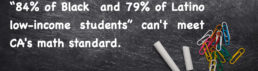
It is worse for low-income Black and Latino students - "84% of Black and 79% of Latino and low-income students" couldn't meet this state math standard.
To the LAUSD's credit, leaders in the district have tried to address the learning loss by increasing and extending the school day or adding additional days to the school year. But, such efforts were astonishingly rejected by UTLA, even though the district was willing to pay fully, including other benefits to those who wanted to help students. Many parents were disturbed and disappointed to see UTLA reject additional student learning.
In addition, the undue burden imposed on parents in these three days is vast. A three-day strike would affect the poorest resident in Los Angeles. Many parents are utterly confused and angry because LAUSD provides not only education for their children but also childcare and food. Schools are where many poor students eat breakfast and lunch, and many are even given food for dinner. Shutting down campuses is devastating for these needy students.
On Monday, many students brought home packages for school work, not just for the three but ten days. Who will help these children with their homework? A good 80% of the students at LAUSD live in poverty, and their parents have to work long hours, leaving them no time to help their children.
Students have no defenders. There is no secret that children's parents at the district are usually ignored in the decisions that will affect their children. The fight over resources and LAUSD's direction is consistent among the UTLA, Local 99, Charter Schools, and the district leaders. Children's parents are usually expunged from these vital conversations.
Parents need to unite and engage with a deeper level of thinking about how they can become relevant and effectively influence decisions that benefit their children's education.
This strike's guiding principle or theme is to attack poverty in Los Angeles. t is true most of the workers represented by Local 99, like other millions of workers in LA, can't afford to live in this city. Many SEIU members truly live in poverty, which begs the question of why their union spends lavishly on politicians. They should demand more of these politicians who they send to the legislature in Sacramento. Roughly 90% of LAUSD's funding comes from Sacramento. UTLA and Local 99 spend a lot of money on politics. Both unions should demand the state send more money to the district. So LAUSD can pay living wages to workers and better salaries to its teachers.
Living in Los Angeles is not easy, and surely workers represented by Local 99 need help. They are not alone; many people living in Los Angeles need help. But we can not be oblivious to the district's budget constraints. The pandemic funding for the district is no longer coming or is about to stop. And many parents with school-age children are moving to other cities or states, and the decline in enrollment will profoundly affect state funding. Back in 2000, the district had almost 750,000 students. Today's enrollment is just a little more than 400,000 students.
So much for LA being a bastion of liberalism! Come on, progressives, where is the outrage? Speak up for the poor, struggling students. This strike disproportionally impacts poor Latino students. Seven out of ten students at LAUSD are Latino students who live in poverty. And in California, 40% of the population are Latinos. There is no future in this city or this state, for that matter, if Latinos don't get educated.
Thank you for reading
Chamba Sanchez
Lecturer of Politics at LACCD
Photo Credit: Pictures used purchased from Stockphoto.